
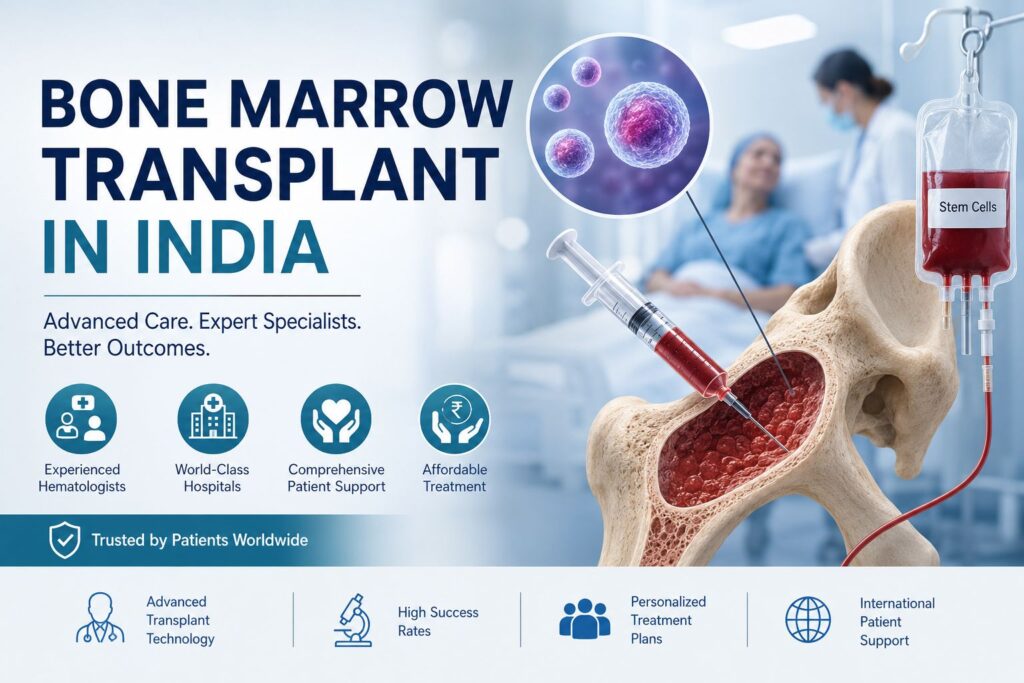
A Bone Marrow Transplant (BMT), also known as a Stem Cell Transplant, is an advanced treatment used for certain blood cancers and blood disorders. It replaces damaged or diseased bone marrow with healthy blood-forming stem cells, helping the body produce healthy blood cells again.
Doctors may recommend a Bone Marrow Transplant for conditions such as leukemia, lymphoma, multiple myeloma, aplastic anemia, and thalassemia, depending on the patient’s diagnosis and overall health.
Over the years, India has become a preferred destination for Bone Marrow Transplant treatment because of its experienced hematologists, advanced transplant units, internationally accredited hospitals, and affordable treatment options. For international patients, receiving treatment in India often combines quality medical care with comprehensive support throughout the journey.
What Is a Bone Marrow Transplant?
Bone marrow is the soft tissue inside certain bones where blood cells are produced. When the bone marrow is damaged by disease or does not function properly, it may no longer produce enough healthy blood cells.
A Bone Marrow Transplant replaces these unhealthy stem cells with healthy ones. Depending on the patient’s condition, the stem cells may come from the patient or from a compatible donor.
The treatment aims to:
- Restore healthy blood cell production
- Replace diseased bone marrow
- Support treatment for certain blood cancers and blood disorders
- Improve long-term treatment outcomes in eligible patients
Not every patient requires a transplant. The decision is based on several factors, including the disease, its stage, age, overall health, and the treating hematologist’s evaluation.
Who May Need a Bone Marrow Transplant?
A Bone Marrow Transplant may be recommended for patients diagnosed with:
- Leukemia
- Hodgkin and Non-Hodgkin Lymphoma
- Multiple Myeloma
- Aplastic Anemia
- Thalassemia
- Certain inherited or acquired blood disorders
In some cases, these conditions can be managed with chemotherapy, targeted therapy, immunotherapy, or maintenance treatment. A transplant is considered when it offers the best chance for long-term disease control or recovery.
Types of Bone Marrow Transplant
Autologous Bone Marrow Transplant
In an Autologous Bone Marrow Transplant, doctors use the patient’s own stem cells. These cells are collected before high-dose chemotherapy and returned to the patient after treatment. This approach is commonly used for multiple myeloma and certain types of lymphoma.
Allogeneic Bone Marrow Transplant
An Allogeneic Bone Marrow Transplant uses stem cells from a compatible donor, who may be a sibling, another family member, or an unrelated matched donor. This type of transplant is often recommended for conditions such as leukemia, aplastic anemia, and some lymphomas.
Haploidentical Bone Marrow Transplant
A Haploidentical Bone Marrow Transplant uses stem cells from a half-matched family donor, such as a parent, child, or sibling. It has expanded treatment options for patients who do not have a fully matched donor.
How Does the Bone Marrow Transplant Procedure Work?
Although every patient’s treatment plan is different, a Bone Marrow Transplant generally follows these steps:
- Medical Evaluation: Doctors assess the patient’s health and determine whether a transplant is appropriate.
- Donor Matching: If a donor transplant is planned, compatibility testing is carried out to identify a suitable donor.
- Stem Cell Collection: Healthy stem cells are collected either from the patient or the donor.
- Conditioning Therapy: High-dose chemotherapy, and in some cases radiation therapy, is used to prepare the body for the transplant.
- Stem Cell Infusion: The healthy stem cells are infused through an intravenous (IV) line, similar to a blood transfusion.
- Engraftment: The transplanted stem cells begin producing healthy blood cells, a process that is carefully monitored by the medical team.
Recovery After a Bone Marrow Transplant
Recovery after a Bone Marrow Transplant varies from person to person. Factors such as the patient’s age, overall health, the type of transplant, and the underlying disease all influence the recovery process.
Following the transplant, patients remain under close medical supervision while doctors monitor blood counts, immune system recovery, and the body’s response to the new stem cells. This stage, known as engraftment, usually takes place over the following weeks.
After leaving the hospital, regular follow-up visits, prescribed medications, and good hygiene practices are essential to reduce the risk of infection and support recovery. Patients should always follow their doctor’s advice regarding diet, physical activity, and returning to daily routines.
Are There Any Risks?
Like any major medical procedure, a Bone Marrow Transplant carries certain risks. However, advances in transplant medicine and supportive care have significantly improved patient outcomes over the years.
Possible complications may include:
- Infection due to a weakened immune system
- Bleeding caused by low platelet counts
- Side effects from chemotherapy or other medications
- Graft-versus-host disease (GVHD) in some allogeneic transplants
- Delayed recovery of healthy blood cells
The transplant team closely monitors patients before, during, and after treatment to identify and manage any complications as early as possible.
Why Choose India for Bone Marrow Transplant?
India has become one of the leading destinations for Bone Marrow Transplant in India, attracting patients from around the world for advanced hematology care.
Many hospitals offer dedicated transplant units, experienced hematologists, and access to modern treatment technologies. In addition to quality medical care, patients often choose India because treatment can be more cost-effective than in many other countries without compromising on clinical standards.
International patients also benefit from English-speaking healthcare professionals, comprehensive treatment planning, and access to internationally accredited hospitals, making India a trusted destination for blood cancer treatment and stem cell transplantation.
How MedicHost Supports International Patients
Planning treatment in another country involves much more than choosing a hospital. From medical consultations to travel arrangements, international patients often need guidance at every stage of their journey.
MedicHost is a medical tourism facilitator that helps international patients connect with experienced doctors and leading hospitals across India. As described on the MedicHost website, the team assists patients by helping them access appropriate treatment options while making the treatment journey smoother and more organized.
MedicHost supports international patients with:
- Connecting with experienced specialists and hospitals
- Treatment guidance and medical opinion
- Transparent treatment cost estimates
- Medical visa assistance
- Travel and accommodation coordination
- Language support where required
- Assistance throughout treatment and follow-up care
By coordinating these services, MedicHost enables patients and their families to focus on recovery while reducing many of the logistical challenges associated with medical travel.
Frequently Asked Questions
Conclusion
A Bone Marrow Transplant (BMT) has transformed the treatment of many serious blood disorders and blood cancers. For eligible patients, it can improve treatment outcomes and, in some cases, offer the possibility of long-term remission or a cure.
If you or a loved one has been advised to undergo a Bone Marrow Transplant in India, understanding the treatment process is the first step toward making informed healthcare decisions.
With access to experienced hematologists, advanced transplant facilities, and internationally accredited hospitals, India continues to be a trusted destination for patients seeking specialized hematology care.
Start Your Treatment Journey with MedicHost
MedicHost helps international patients connect with leading hospitals and experienced specialists across India for advanced treatments, including Bone Marrow Transplant. From treatment guidance and cost estimates to visa assistance and travel coordination, the team supports patients throughout their medical journey.
Contact MedicHost today to explore your Bone Marrow Transplant treatment options in India and receive personalized guidance for your healthcare needs.